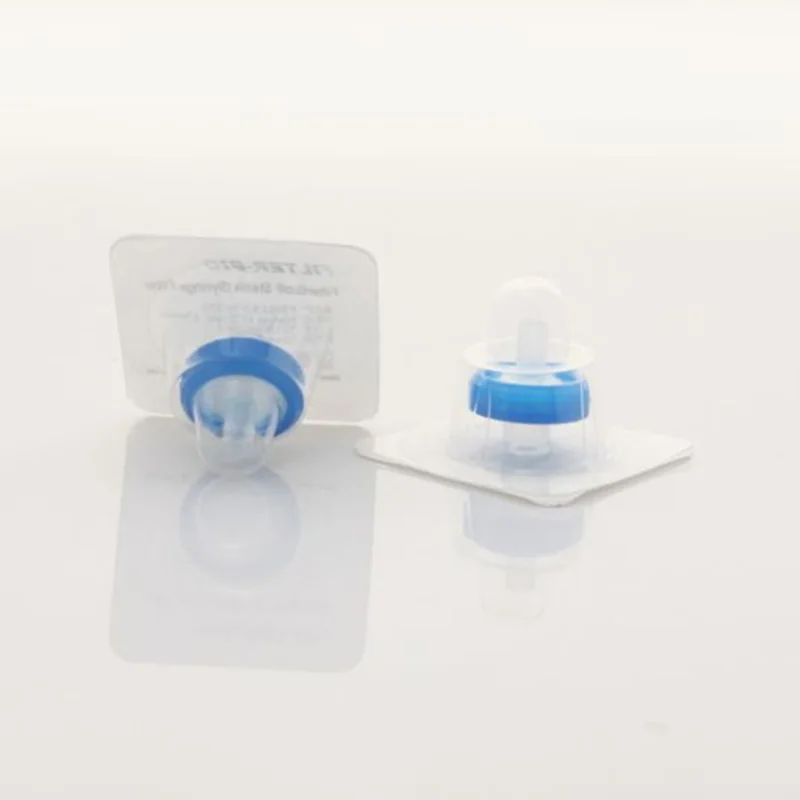
HPLC Syringe Filters
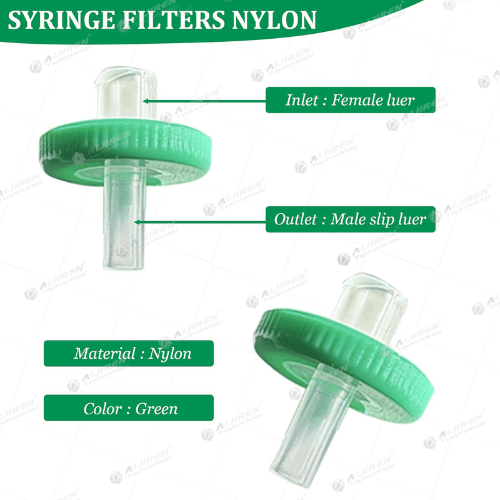
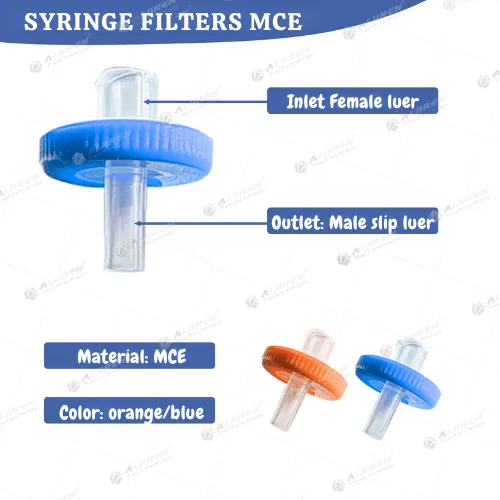
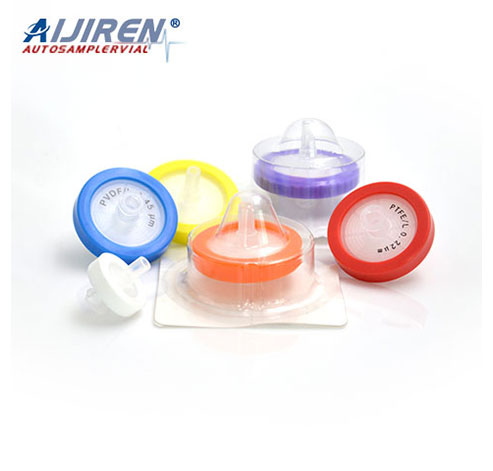
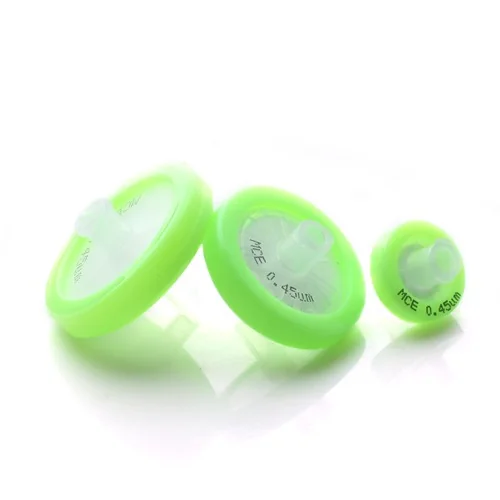
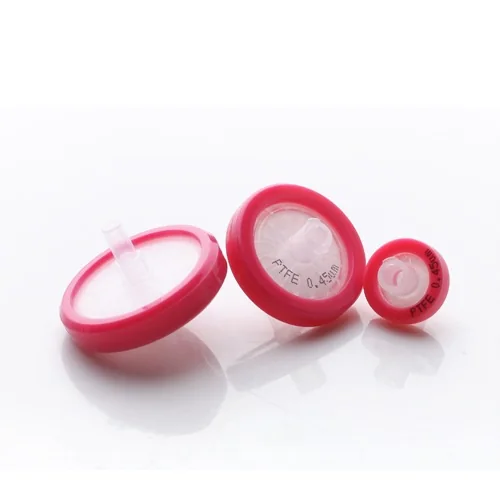
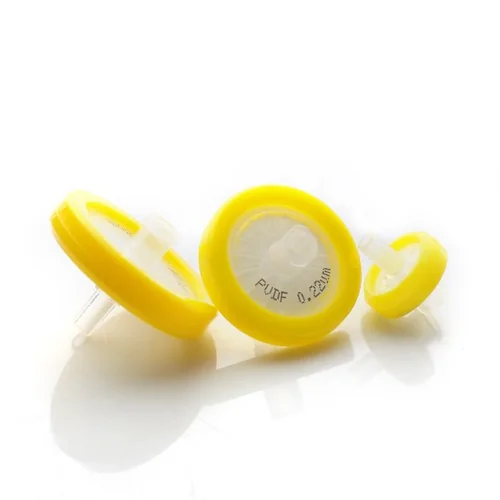
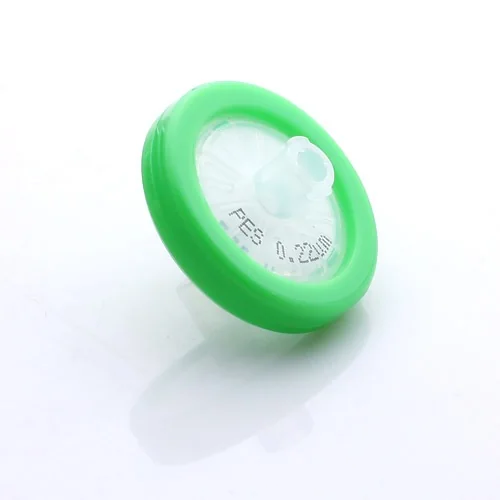
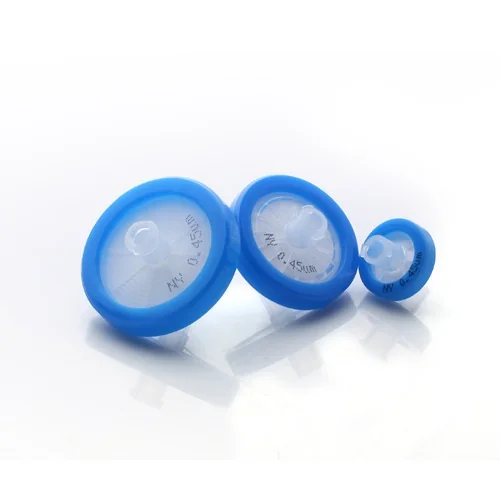
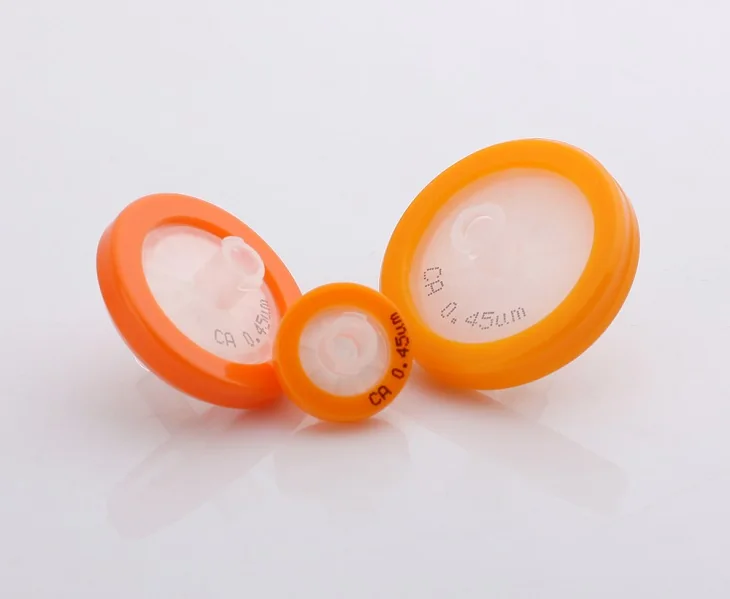
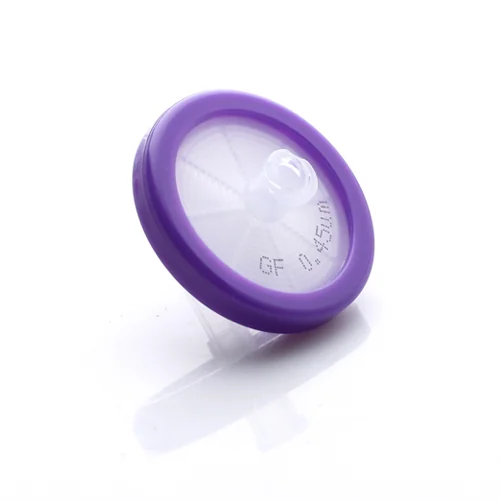
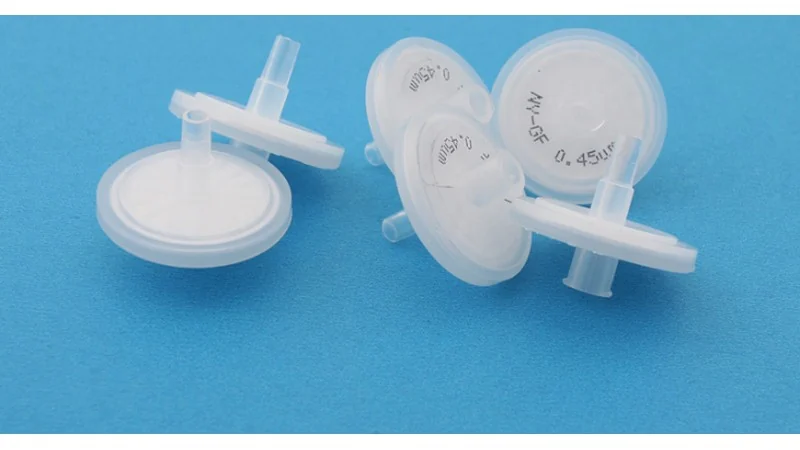
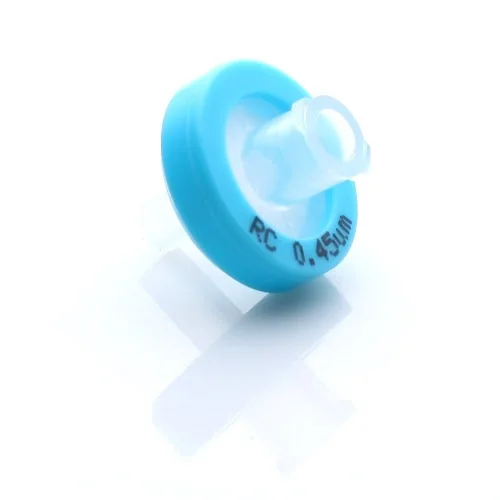
Aijiren offers high-quality Syringe Filters designed for efficient sample preparation and equipment protection. Our filters are available in a variety of membrane materials (Nylon, PTFE, PVDF, PES, MCE, PP, CA) and sizes (13mm, 25mm, 33mm) to suit different solvent compatibilities. With both Sterile and Non-Sterile options, we support a wide range of applications from routine HPLC analysis to sensitive biotech and pharmaceutical research.
How to choose a syringe filter
A syringe filter has to do three things: remove particulate without removing your analyte, resist the solvent, and flow fast enough not to slow the workflow. Those three requirements pull against each other, which is why membrane chemistry matters more than pore size.
- Pore size — 0.22 µm for sterile filtration and UHPLC; 0.45 µm for general HPLC sample prep.
- Membrane chemistry — must be chemically compatible with the sample solvent.
- Diameter — 13 mm for small volumes, 25 mm for 1–100 mL, 33 mm for larger or viscous samples.
- Housing — polypropylene is standard; avoid if the solvent attacks PP.
Membrane chemistry compared
| Membrane | Hydrophobic / hydrophilic | Protein binding | Best for |
|---|
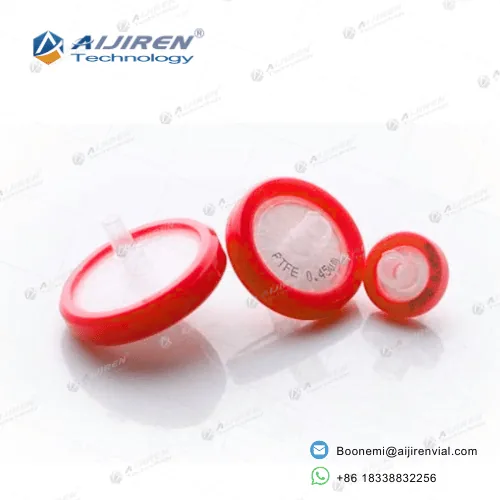
| PTFE | Hydrophobic (hydrophilic grades available) | High | Aggressive organic solvents, GC, non-aqueous HPLC |
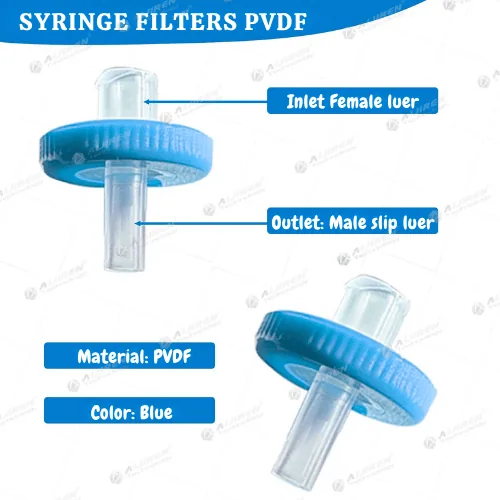
| PVDF | Hydrophobic or hydrophilic | Low | General HPLC, aqueous and mixed phases |
| PES | Hydrophilic | Very low | Protein solutions, high flow, low binding |
| MCE | Hydrophilic | High | Aqueous samples, sterile filtration, general lab |
| Nylon | Hydrophilic | Moderate | Aqueous and organic, good solvent resistance |
| CA | Hydrophilic | Very low | Protein and serum samples |
| GF | Hydrophilic | Low | High-particulate samples, pre-filtration |
| RC | Hydrophilic | Very low | Protein work, low extractables |
Pore size: 0.22 or 0.45 µm?
- 0.22 µm — required for sterile filtration and for UHPLC, where sub-2 µm frits clog on anything larger. Also the safer choice for trace analysis.
- 0.45 µm — the standard for conventional HPLC sample prep. Faster flow, less likely to load up on viscous samples.
- Do not "filter harder" — if a sample clogs a 0.45 µm filter, the answer is centrifugation or a glass fibre pre-filter, not pushing harder, which forces particulate through.
Diameter and hold-up volume
Smaller filters waste less sample. A 13 mm filter holds up roughly 10–20 µL; a 25 mm filter holds 50–100 µL. For a 200 µL sample, that difference is the difference between a usable result and none.
- 13 mm — sample volumes under 1 mL.
- 25 mm — 1–100 mL, the general-purpose size.
- 33 mm — larger volumes, viscous samples, or where flow rate matters.
Common problems and fixes
| Symptom | Likely cause | Fix |
|---|
| Analyte disappears after filtration | Adsorption onto the membrane | Switch to low-binding PES, CA or RC |
| Filter dissolves or swells | Wrong chemistry for the solvent | PTFE for aggressive organics; check compatibility |
| Filter clogs immediately | High particulate load | Glass fibre pre-filter, or centrifuge first |
| Extractable peaks in blanks | Surfactants leaching from the housing | Rinse with 1–2 mL of solvent before use |
| Low recovery on small samples | Hold-up volume in an oversized filter | Use a 13 mm filter and account for hold-up |
Frequently asked questions
Which syringe filter is best for HPLC?
For aqueous and mixed-phase samples, hydrophilic PVDF at 0.22 or 0.45 µm is the safe default. For pure organic solvents, hydrophobic PTFE. For proteins, PES or CA to minimise binding.
Can I use a 0.45 µm filter for UHPLC?
No. Sub-2 µm frits clog on particles a 0.45 µm filter lets through. UHPLC methods need 0.22 µm filtration.
Do I need to discard the first few drops?
For trace analysis, yes — the first millilitre carries extractables from the housing. For routine work at normal concentrations it usually makes no difference.
Are sterile filters necessary for HPLC?
Only if you are storing the filtered sample or working with biological matrices. For immediate injection, a non-sterile 0.22 µm filter does the same job at lower cost.
Can I filter a sample twice through the same filter?
No. Reusing a filter risks forcing previously retained particulate through, and the membrane may have partially dissolved. Use a fresh filter per sample.

 English
 Chinese